

HICAP Sustainable Hotel Awards
NOMINATION PERIOD FOR THE SUSTAINABLE HOTEL AWARDS IS CLOSED
The annual HICAP Sustainable Hotel Awards are designed to recognize hotels in the Asia Pacific region creating innovative new methods, strategies, and technologies to face today’s sustainable development challenge, while providing tangible examples of sustainable best practices that can be replicated and adapted across the region.
Worthy hotels/companies can be entered in one or more of the five categories via the online form on the HICAP website. If a winner is not identified in each of the five categories, a maximum of four hotels/companies, regardless of the category, will be honored each year from the submissions received (i.e. there can potentially be multiple winners in one category).
By segmenting sustainable hotel practices into five categories, we recognize the key areas where hotel investment, development, and operations can have the biggest impact locally and globally. The categories enable hotels/companies of all sizes, product positioning, and operating structures to showcase their leadership in embedding sustainability into their decision-making and operating processes.
Nominated properties will be reviewed, and the award recipients selected, by an expert judging panel comprised of the following:
Chiara Calufetti-Lim, Associate Vice President, WATG
Matthew Carlisle, Associate Director, Sustainability, Cundall
Lyndall DeMarco, Managing Director, Only Sustainability Pty Ltd (Honorary Chairman)
Mark Eckstein, Independent Sustainability Advisor
Hervé Houdré, Founder, H2 Sustainability Consulting
Eric Ricaurte, Founder & CEO, Greenview (Chairman)
Masaru Takayama, Chairperson, Global Ecotourism Network
Claire Whitely, Independent Sustainability Consultant
We are sincerely grateful for the support and efforts of such an honorable and knowledgeable group of experts in ensuring the credibility and importance of these Awards.
Award Categories/Criteria
Entries should be completed in accordance with the criteria, which are provided to support you in identifying those factors helping the Judging Panel in making their review and decisions. The criteria are designed to provide ideas for inclusion, but are neither definitive nor exhaustive. Applicants should note achievement of innovation in sustainable best practices is stressed in the review process. Please include relevant information you believe addresses the objectives of sustainable development and operations within the context of the identified categories.
All categories and all entrants should fulfill the following base criteria:
Identify which of the 17 UN Sustainable Development Goals are supported
Demonstrate the aspects of the property and/or initiative that are innovative and exemplary beyond the common best practices (i.e. beyond just obtaining a green certification, installing LED lighting, or holding a volunteer community day)
Explain why a hotel investment audience should be interested in the property and/or initiative
Provide adequate metrics/measurement to demonstrate progress and achievement in sustainable goals and objectives relative to starting point levels and/or relevant benchmarks and criteria.
-
Awards in this category focus on environmental education helping people develop skills to make informed decisions about the environment. What people learn leads to behavioral changes triggering them to implement actions helping to reduce negative impacts to the planet, while making positive impacts to preserve biodiversity.
Accommodations playing a role, first, to educate guests and staff, and second, to implement actions benefiting biodiversity, including plants, animals, microorganisms, and their genes. The local people and destination are the beneficiaries of the healthy biodiversity.
This category links with agreements with the Convention on Biological Diversity (CBD), the Ramsar Convention on Wetlands, the World Heritage Convention (WHC), the International Plant Protection Convention (IPPC) and the Kunming-Montreal Global Biodiversity Framework (a landmark agreement to preserve biodiversity by 2030 and beyond).
Actions can focus on 1) supporting local farms 2) planting local flowers, fruits, and vegetables 3) implementing water conservation initiatives 4) supporting local habitat restoration projects (staff time, sponsorship, guest involvement, use of hotel facilities/MICE, etc.) 5) conserving threatened species in artificial ecosystems such as nurseries, botanical gardens, and gene banks within a property, and/or achieving actions with related suppliers 6) utilizing their property or green/blue area for environmental education and 7) providing education tours and engagement for staff, guests and community.
Note: Emphasis will be placed on quantification/ measurement of impacts/practices where applicable.
The judges will be considering methods and actions taken, which may include, among other things, one or more of the following:
Promoting local and indigenous knowledge of biodiversity
Conserving biodiversity in an inclusive way
Taking actions to improve the environment
Participating in the education and protection of the environment
Encouraging action by building awareness of biodiversity issues and practical solutions for implementation.
Whether your property invites guests to make a financial contribution to a charitable organisation that takes care of local environmental initiatives. Guests may be able to participate in the organisation’s activities when present.
Note: Emphasis will be placed on quantification/measurement of impacts/practices where applicable.
-
Often the best environmental development solution is not demolishing an existing asset and rebuild, or replacing an existing building with a new exemplary green building; in many cases the least environmental impact is to reuse the existing building capital by renovating and applying sustainable strategies during the “rehabilitation and adaptation” of existing structures. Sustainable development can embrace the lessons of long-lasting existing buildings with positive environmental, social, and economic implications.
Accordingly, awards in this category focus on embedding innovative methods to preserve natural and cultural resources in the renovation, retrofit, repurposing, or adaptive reuse of existing facilities and structures.
Note: Emphasis will be placed on quantification/ measurement of impacts/practices where applicable.
The judges will be considering, among other things, aspects such as:
Identification and preservation of existing developments and/or buildings with historic and heritage significance
Retention of the setting and visual esthetics of the existing structures and facilities
Reuse of existing structures and building components
Innovation in adaptive reuse for hotels
Use of local, environmentally sustainable, and culturally significant materials or furnishings
Upgrade of existing systems and application of sustainable technologies
Best-in-class management of deconstruction processes, recycling and reuse of demolition debris and construction waste, and repurposing of building elements
Innovation in investment and financing mechanisms to fund the renovation (i.e. Green Bonds, crowd funding, grants, government or supplier partnerships, incentives and rebates, etc.)
-
Awards in this category focus on actions taken to reduce climate change and increase resilience to future climate-related impacts. It recognizes hotels can play a role in increasing energy efficiency and decarbonization in their buildings, operations and value chains, helping to support global climate action in line with the Paris Agreement, the Glasgow Declaration, The Baku Declaration on Enhanced Climate Action in Tourism and the UN Sustainable Development Goals 7, 12 and 13.
Actions can incorporate the use of technological, behavioral and nature-based solutions and can focus on reducing or sequestering carbon emissions, increasing the use of renewable energy and reducing the consumption of materials and resources in the building design, on property and in the supply chain.
Note: Emphasis will be placed on quantification/ measurement of impacts/practices where applicable.
The judges will be considering action methods taken, which may include, among other things, one or more of the following:
Advanced generation or procurement of renewable energy to reduce emissions and local fossil fuel reliance
Waste management initiatives contributing to CO2 emissions
Project structuring and design to go beyond minimization of impacts to enhancing them and creating more positive impact
Conservation or restoration of key carbon sinks, such as forests and oceans, or use of technology to sequester carbon
Sustainable Consumption and Production (SCP) models, or supply chain initiatives, to reduce carbon footprints from purchased goods within FF&E, OS&E, and/or F&B
Proactive and large-scale guest engagement or community involvement to catalyze awareness on the impacts within the destination as well as elsewhere resulting from the hotel’s activities and purchasing
Encouraging action through staff to build awareness of practical solutions they can implement in their roles.
Innovation in investment and financing mechanisms to fund the projects (i.e. Green Bonds, crowd funding, grants, government or supplier partnerships, incentives and rebates) that lower the cost of capital, or create fixed-cost asset models from traditional variable cost items such as energy and waste
-
Awards in this category focus on optimizing a hotel’s resources and reach generating tangible positive impact for local communities; moving beyond philanthropy toward strategic use of resources, expertise, and funds creating better community engagement models with win-win benefits and quantifiable impact metrics.
The judges will be considering, among other things, aspects such as:
Innovative use of inventory or routine areas of spend to maximize community benefit
Methods of building programs and models with local suppliers and partners to stimulate entrepreneurship, local business ownership, and autonomy
Reviving and protecting authentic cultural heritage traditions that benefit the wider destination and strengthen its sense of place
Generating positive multipliers for other sustainable development goals such as enabling communities to address climate change and sustainable consumption & production
Innovative and effective stewardship addressing water stress, access, and quality concerns
Data-driven analysis of results demonstrating positive social impact metrics, beyond just volunteer hours, cash donation amounts, or number of community members served
Innovation in investment and financing mechanisms to fund the projects and create value for the hotel or the project
Whether your property invites guests to make a financial contribution to a charitable organisation that takes care of local societal initiatives. Guests may be able to participate in the organisation’s activities when present.
-
Awards in this category focus on the design brief agreed and ways in which developers, owners and operators have worked with architects, designers, engineers, etc. in realizing most innovative and holistic methods, strategies and technologies in both building materials and operational efficiency, minimizing impacts to the site and its surrounding natural environment and local communities, and creating value to the location’s natural and cultural heritage.
Note: Property must be completed/operating at time of entry.
The judges will be considering, among other things, aspects such as:
Specific innovative design elements promoting the latest technology in sustainability to reduce impacts and increase efficiency (renewable energy, net-zero building, water recycling, waste/water treatment, use of vegetation, advanced building materials, electrification and energy procurement/storage/distribution, building and operational automation, etc.)
Integration and protection of the natural environment and layout within the wider landscape to preserve ecosystems and minimize disruption of biodiversity
Overall appreciation of the design within the community and landscape to create an appropriate sense of place (reflecting cultural norms, heritage, traditions, authenticity, etc.)
Specific innovative elements in the building’s construction and development, such as using materials with renewable or circular economy aspects, passive design, biomimicry, permaculture, water harvesting, etc.
Integration of aesthetics, guest experience, and innovative design with sustainability
Innovation in investment and financing mechanisms to fund the projects (i.e. Green Bonds, crowd funding, grants, government or supplier partnerships, incentives and rebates) that lower the cost of capital, or create fixed-cost asset models from traditional variable cost items such as energy and waste
Entry Guidelines
1. Eligibility
To be eligible for award consideration, entrants must be able to effectively demonstrate the following:
The property is located within the Asia-Pacific Region
If applying for the Sustainable Design Award, the project should have been completed and operating by time of entry submission
Identify which of the 17 UN Sustainable Development Goals are supported
Demonstrate the aspects of the property and/or initiative that are innovative and exemplary beyond the common best practices (i.e. beyond just obtaining a green certification, installing LED lighting, or holding a volunteer community day)
Explain why a hotel investment audience should be interested in the property and/or initiative
Provide adequate metrics/measurement to demonstrate progress and achievement in sustainable goals and objectives relative to starting point levels and/or relevant benchmarks and criteria.
2. Format
The application form can be accessed from the HICAP website.
3. Submitting Entries
Entries should be submitted online or by email to: SustainableHotelAwards@HICAPconference.com
4. Supplemental Material
Supplemental material can be submitted to accompany an entry but must relate specifically and directly to the criteria in the application form. Boilerplate content and unrelated initiatives (i.e. program for training at-risk youths in the kitchen for a hotel applying for Climate Action) will not be reviewed and risks diluting the application’s relevant strengths.
ACTIVE LINKS to associations/activities/charities etc. mentioned in the materials should be included for easier reference and review.
File Format: Microsoft Word, PowerPoint, or PDF (keeping in mind File Size restrictions of 10MB and 20 pages maximum)
Font: No smaller than 12 point
Language: English
All supplemental materials should be submitted by email (clearing indicating the related entry) to: SustainableHotelAwards@HICAPconference.com
5. Closing Date
Entries must be submitted by midnight (SGT) on 14 August 2026.
6. Promotional and Supporting Material
As this is a sustainability award, hard copy or promotional material is not required and should not be submitted.
7. Awarded Entry Presentations
Presentations of the awarded hotels will be prepared based on the entry information provided and may be published on the HICAP conference website and on other sites and publications publicizing the Award.
8. Assessment and Adjudication
HICAP will convene an assessment and award selection panel of external sustainability experts/practitioners. These judges discuss and score entries to determine the award recipients. The decision of the Judging Panel is made in good faith and is final. If necessary, the Judging Panel may reach out to reference names, other industry contacts, or draw upon collective first-hand knowledge for due diligence of the information being submitted. When deciding, the Judges will consider:
Measurable achievement relative to the award base and category criteria
Demonstration of innovation
Evidence of partnership
Replicability (providing solutions for sustainability)
Relevance to the hotel investment audience
9. Notification of Results
If a winner is not identified in each of the five categories, a maximum of four hotels/companies, regardless of the category, will be honored each year from the submissions received (i.e. there can potentially be multiple winners in one category). Entrants will be notified by 18 September 2026.
10. Awards, Announcement and Presentation
The HICAP Sustainable Hotels Awards will be announced and presented during HICAP at the Fairmont Singapore & Swissotel The Stamford. Award recipients or their appointed representatives, if not already registered HICAP delegates, will be provided with a special pass for participating in the award presentation.
11. Feedback
Given the volume of entries, we are unable to provide feedback to entrants.
12. Questions, Feedback or Suggestions
Any questions or comments regarding the entry requirements and procedures or suggestions about the HICAP Sustainable Hotels Award can be made by email to: SustainableHotelAwards@HICAPconference.com
Past HICAP Sustainable Hotel Award Winners
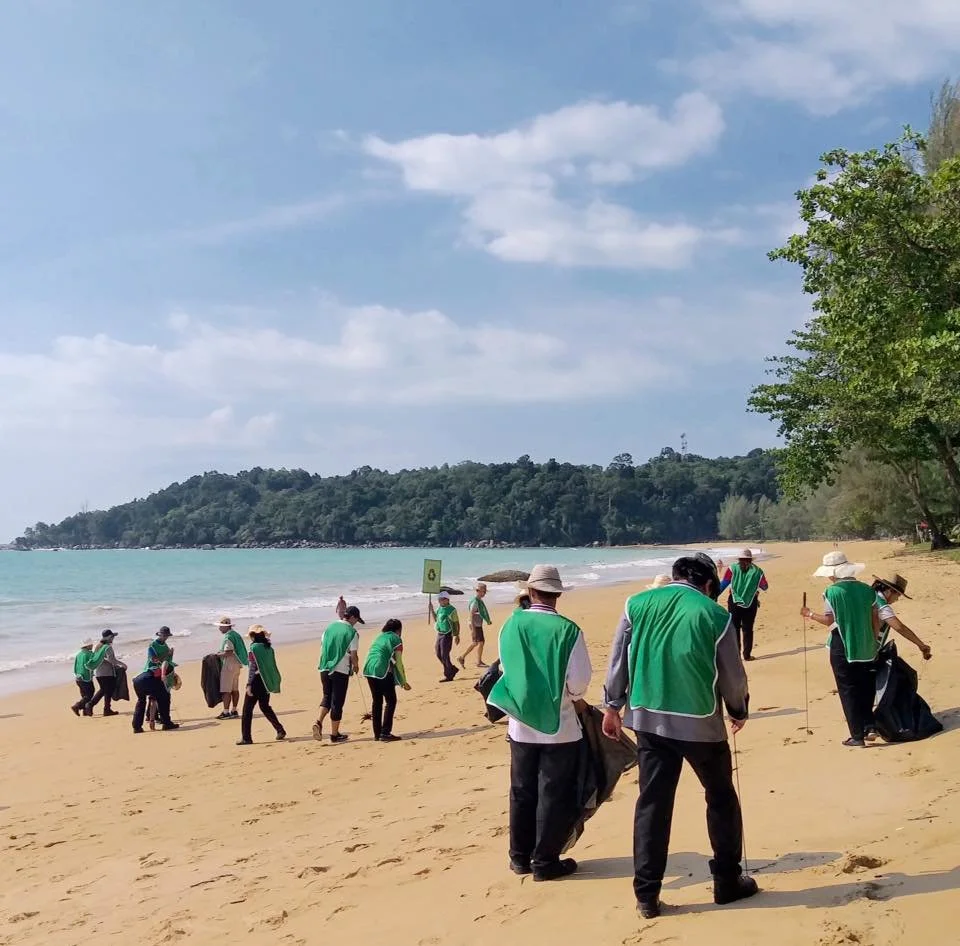
2025 Biodiversity Action & Education - Khaolak Merlin Resort in Phang Nga, Thailand Climate Action - COMO Metropolitan Singapore, Singapore Positive Community Impact - Six Senses Con Dao in Vietnam 2024 Building, Renovation, Preservation, Adaptive Reuse, & Conversion – Crystalbook Kingsley, Newcastle, Australia Climate & Biodiversity Action – Six Senses Ninh Ban Bay, Khanh Hoa, Vietnam Positive Community Impact – Song Saa Private Island, Koh Rong Archipelago, Cambodia Sustainable Design – Citadines North Walker Sydney, Sydney, Australia 2023 Building, Renovation, Preservation, Adaptive Reuse, & Conversion - The Tamara Kodai, India Climate & Biodiversity Action - Soneva Fushi, Maldives Positive Community Impact - Cempedak Island, Indonesia Sustainable Design - Six Senses Vana, India 2022 Climate Action – Cardamom Tented Camp, Cambodia Positive Community Impact – Soneva Fushi, Maldives Sustainable Design – lyf one-north, Singapore 2021 Positive Community Impact - The Fern Hotels & Resorts, India 2020 Climate Action - Fairmont Singapore & Swissôtel The Stamford - Singapore Positive Community Impact - Six Senses Yao Noi - Thailand Positive Community Impact - Phuket Hotels for Islands Sustaining Tourism (PHIST) - Thailand Sustainable Design - Parkroyal Collection Pickering - Singapore 2019 Building Preservation/Adaptive Reuse - Tai O Heritage Hotel - Hong Kong Climate Action - Grand Park City Hall – Singapore Positive Community Impact - Eaton HK - Hong Kong Sustainable Design - Six Senses, Krabey Island - Cambodia 2018 Sustainable Design - The Peninsula Beijing – Beijing, China Climate Action - Six Senses Fiji Resort – Malolo Levu Island, Fiji Positive Community Impact - El Nido Resorts– Palawan, Philippines 2017 Sustainable Design - Cempedak Private Island, Riau Province – Indonesia Sustainable Investment - Soneve Fushi, Baa Atoll – Maldives Positive Community Impact - Shangri-La Hotels & Resorts – Group-wide “Rooted in Nature” initiative 2016 Sustainable Project Design - The Temple House Chengdu – China Sustainable Operations - ITC Grand Chola Chennai – India Sustainable Operations - Jetwing Yala – Sri Lanka Sustainable Communities - Nikoi Island, Riau Province – Indonesia 2015 Sustainable Project Design - Element Suzhou Science and Technology Town – China Sustainable Operations - Alta Pension House Davao City – Philippines Sustainable Destinations - Tai O Heritage Hotel – Hong Kong Sustainable Communities - Lemon Tree Hotels Group – India 2014 Sustainable Project Design - Holiday Inn Express Singapore Orchard Road – Singapore Sustainable Operations - Radisson Blu Cebu – Philippines Sustainable Communities - Shangri-La Villingili – Maldives Sustainable Communities - Ten Knots Development / El Nido Resorts – Philippines 2013 Sustainable Project Design - Holiday Inn Express Hong Kong SoHo – Hong Kong Sustainable Project Design - Parkroyal on Pickering – Singapore Sustainable Operations - Bambu Indah – Bali, Indonesia Sustainable Operations - Jetwing Lagoon – Negombo Sri Lanka 2012 Sustainable Project Design - Jetwing Vil Uyana – Sigiriya, Sri Lanka Sustainable Operations - Radisson Blu Resort Temple Bay – Mamallapuram, Tamil Nadu, India Sustainable Destinations - Anantara Golden Triangle Resort & Spa – Chiang Rai, Thailand Sustainable Communities - Song Saa Private Island – Koh Rong Archipelago, Sihanoukville, Cambodia 2011 Sustainable Project Design - The Upper House – Hong Kong Sustainable Operations - ITC Maurya – New Delhi, India Sustainable Communities - Shangri-La’s Fijian Resort & Spa – Yanuca, Fiji Special Award: Sustainable Leadership - Six Senses Resorts & Spas 2010 Sustainable Project Design - ITC Royal Gardenia Bangalore – India Sustainable Operations - Crowne Plaza Alice Springs – Australia Sustainable Destinations - El Nido Resorts – Philippines Sustainable Communities - Shangri-La Wuhan – China 2009 Sustainable Project Design - Six Senses Yao Noi – Phang-Nga, Thailand Sustainable Operations - Radisson Plaza Hotel Sydney – Australia Sustainable Destinations - The Oberoi Udaivilas – Udaipur, Rajasthan, India Sustainable Communities - The School House Rental Homes at Mutianyu Great Wall – Beijing, China 2008 Leveraging Influence - Shinta Mani – Siem Reap, Cambodia Site Selection, Sustainability, Architectural & Physical Design - URBN Hotel, Shanghai, China Special Award: Richard Baily, Tahiti Beachcomber SA 2007 Operational Aspects - Surfers Paradise Marriott Resort & Spa – Queensland, Australia Leveraging Influence - Soneva Gili and Six Senses Spa – Lankan Fushi, Maldives Site Selection, Operational Aspects & Leveraging Influence – Nihiwatu Resort, Sumba Island, Indonesia